
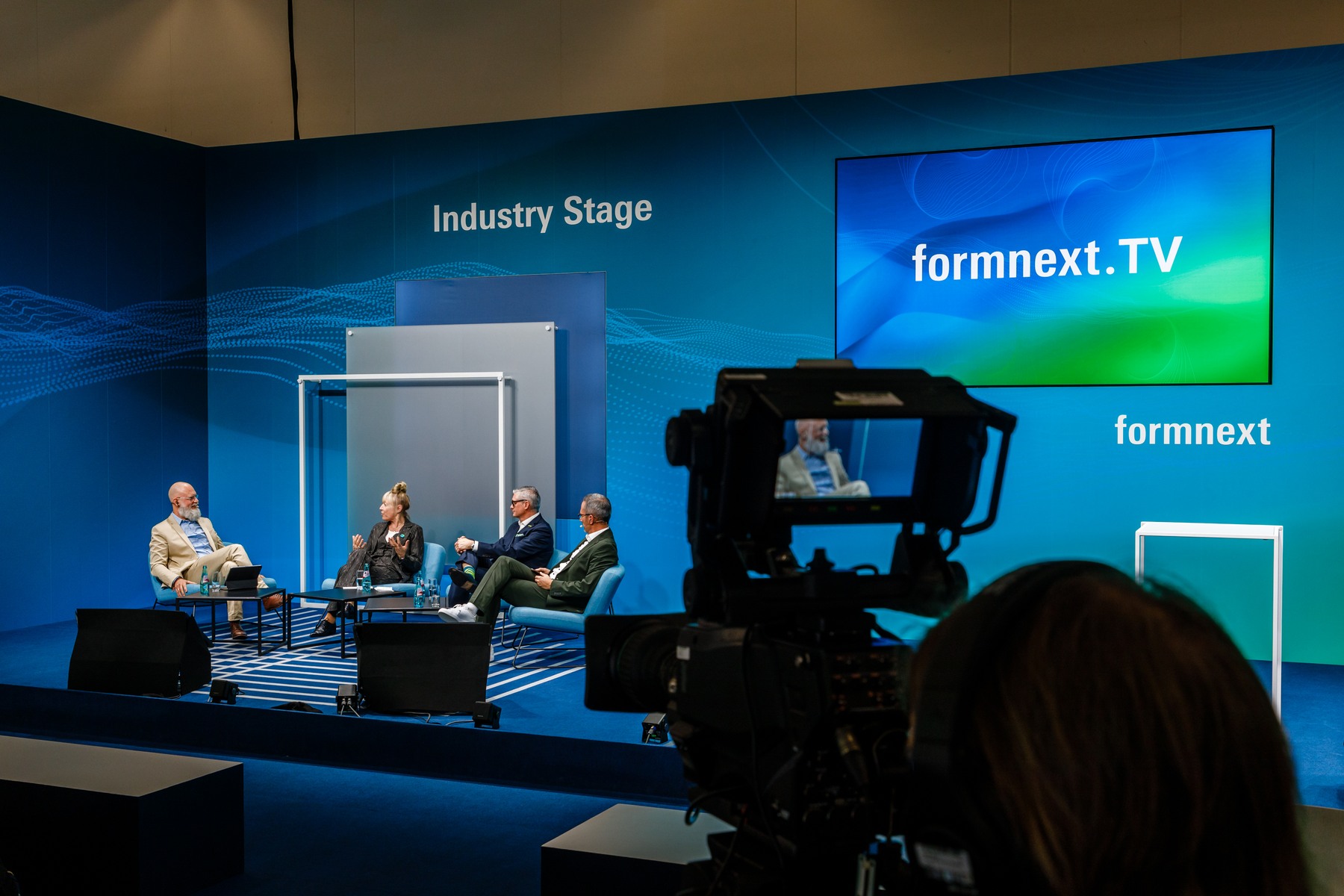
Frankfurt, Germany – Formnext 2024 once again brought together the leading players in additive manufacturing. Behind the polished stands and corporate promises, however, lies a harsher, more realistic picture of contemporary 3D printing.
An industry racing ahead – but where to?
Everyone seems to be racing to turn 3D printing into the next industrial revolution. Some manufacturers are reinventing themselves as material suppliers; others are moving from metallurgy into metal powders and 3D printers. Yet the reality is that no technology truly impresses with the refinement of its output. Almost every printed object requires further processing – milling, firing or some other finishing operation.
Not architecture, but… outer space!
The focus is on industries that are "short on imagination but rich in resources", such as healthcare and aerospace. Architectural printing? Almost no movement. The reasons are clear: the low value of building materials and the lack of an economic rationale, unless we are talking about China. There, if everything is made of clay bricks, the rice paddies disappear, along with the rice – and hunger follows.
China: the quiet leader
Chinese companies are gaining ground quietly but steadily. A seemingly ordinary conversation at a stand selling 3D-printed trainers revealed: "We sell them for 170 euros… 125,000 pairs already." The numbers speak for themselves. China is positioning itself not only as a manufacturer but also as a market leader.
Plenty of technology, little focus
Form follows function, but in 3D printing, function is still searching for its optimal form. There were demonstrations using metals, polymers, ceramics and even organic molecules. But real progress in positioning and deposition control was almost absent. Most technologies work in a single plane that simply rotates.
Could this be the interesting question we should pursue?
Amid all this technological variety, an idea emerged with the potential to change the game: an extruder with a variable, flexible nozzle ranging from 0 to 30 mm. Instead of hardness to resist wear, it offers flexibility, adaptability and high throughput. The idea came not from a corporate presentation but from a conversation with Bobi and Rayko. Rayko shared his observations on the difficulties of concrete printing. He promised to send me documents, but even without them my mind was already working at full speed.
What comes next?
Developing a variable-nozzle extruder that can print concrete or clay at high speed could open up new possibilities well beyond construction. While we develop the hardware, slicing and control software will mature. Our resources are limited, so focusing on the extruder seems the most sensible and effective way forward. Now, back to the drawing board! This quick report was made possible by yet another British Airways delay.
An authored article presenting personal observations and opinions.
Formnext – Mesago Messe Frankfurt GmbH / Marc Jacquemin